Introduction
Choosing the right harness for a large or working dog is about much more than appearance. A strong dog can put substantial force through a harness when pulling, changing direction, climbing, or reacting to something in the environment. That is why tactical dog harnesses with handle designs have become popular among owners of large breeds, service dogs, working dogs, hiking companions, and dogs that need additional handling control.
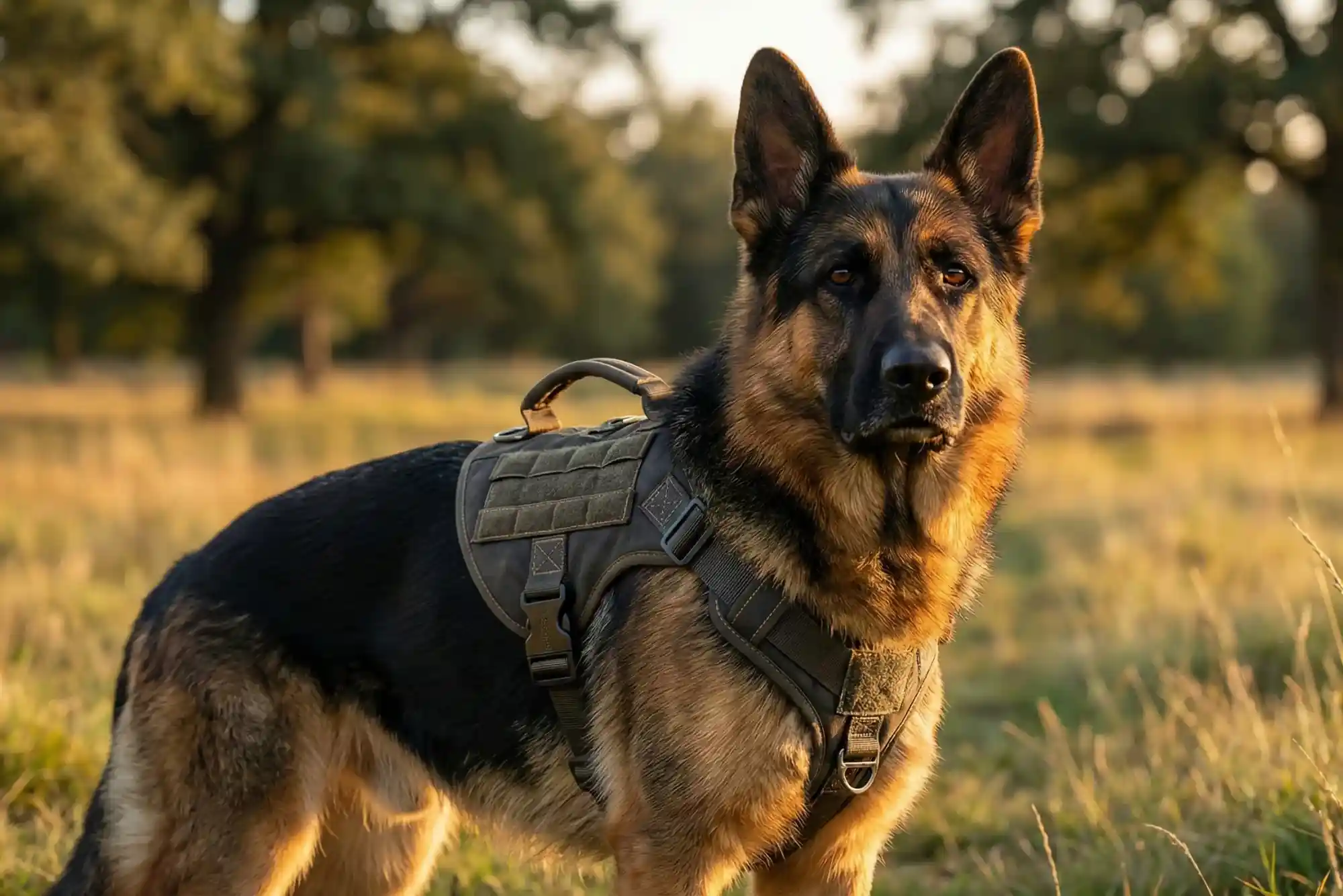
A tactical harness can provide a reinforced grip handle, multiple leash attachment points, adjustable straps, padding, and sometimes MOLLE-style webbing for carrying small items. However, not every tactical-looking vest is suitable for demanding use. Materials, stitching, hardware, fit, weight, and the dog’s individual body shape all matter.
For large breeds and service dogs, the goal should be a secure, comfortable harness that supports controlled handling without unnecessarily restricting movement. Current harness comparisons emphasize that features such as reinforced handles, durable webbing, metal hardware, and appropriate adjustment points can make a meaningful difference.
Why Tactical Dog Harnesses with Handle Are Popular
The most noticeable difference between a tactical harness and a basic harness is its construction. Tactical designs generally use a vest-style body with broader coverage and additional attachment points.
The handle is particularly useful with larger dogs. Instead of reaching for the collar during a sudden situation, the handler can use the harness handle to establish close physical control. A properly reinforced handle can also help when guiding a dog over an obstacle or keeping a dog close in a crowded environment.
The important word is reinforced. A decorative fabric loop is not automatically a reliable lifting or control point. The handle should connect securely to the harness’s load-bearing structure. Some current harness guides specifically recommend examining stitching, webbing, and handle construction rather than assuming that a product is strong simply because it is marketed as “tactical.”

What Makes the Best Tactical Dog Harnesses with Handle?
There is no single harness that fits every dog or every working situation. Instead, look for a combination of construction, fit, comfort, and functionality.
Reinforced Handle Construction
For a large dog, the handle should be one of the first features you inspect. Look for strong webbing, reinforced stitching, and attachment points that connect to the harness’s main structure.
Bar-tack stitching around stress points is one useful construction detail. It indicates that the manufacturer has reinforced an area that may experience repeated tension. Some professional-oriented harnesses also publish hardware or load specifications, which makes their construction easier to evaluate.
Durable Webbing and Outer Material
Tactical harnesses commonly use materials such as 1000D or 1050D nylon. These fabrics are popular because they can provide abrasion resistance while supporting the structured design of the vest.
However, a higher denier number alone does not guarantee that a harness is better. The webbing, seams, buckles, D-rings, padding, and overall construction must work together.
Strong Leash Attachment Points
A large dog can generate significant force through the leash attachment. This makes the D-ring or V-ring an important part of the harness.
Some tactical harnesses offer both front and rear attachment points. A front attachment can be useful during training because it changes the direction of leash pressure, while a rear attachment may be more convenient for ordinary walking.
The choice should depend on the dog’s behavior and training rather than simply selecting the harness with the greatest number of rings.
Multiple Adjustment Points
Large breeds do not all have the same body shape. A German Shepherd, Labrador Retriever, Rottweiler, Great Dane, and Mastiff can have very different chest, neck, and shoulder proportions.
Multiple adjustment points make it easier to position the harness securely without creating excessive pressure. Current large-dog harness guidance emphasizes measuring girth rather than choosing a size based only on body weight.
How to Choose a Tactical Dog Harness for Large Breeds
Large dogs need a harness that fits their anatomy rather than simply being labeled “XL.”
Start by measuring the dog’s chest girth around the widest part of the rib cage, normally just behind the front legs. Compare that measurement with the manufacturer’s sizing chart.
Do not assume that two XL harnesses have identical dimensions. One manufacturer’s XL can be very different from another manufacturer’s XL.
Consider the Dog’s Chest Shape
Deep-chested breeds often need more adjustment around the chest and shoulders. If the harness sits too close to the front legs, it may cause rubbing during movement.
A properly fitted harness should remain stable when the dog walks, turns, sits, and changes direction. It should not twist sideways or migrate toward the neck.
Check Movement Before Long-Term Use
Put the harness on your dog and watch them walk naturally. Pay attention to the shoulders, front legs, chest, and underarm areas.
The dog should be able to extend the front legs normally. If the harness repeatedly rubs the armpits or interferes with the shoulders, a different shape may be more appropriate.
A good fit is more important than having every tactical feature available.
Tactical Harness Features That Actually Matter
MOLLE webbing, hook-and-loop panels, multiple D-rings, and large handles are common tactical features. But each should have a practical purpose.
MOLLE-style panels can be useful for carrying identification patches, small pouches, lights, or other lightweight equipment. They can also add unnecessary bulk if you attach items the dog does not need.
For everyday walking, the handle and leash attachment may be more valuable than a large amount of modular storage.
Breathability is another important consideration. Heavy nylon can become warm, particularly in hot weather. Some designs combine durable outer fabric with mesh lining or padded ventilation areas. Rabbitgoo’s tactical harness, for example, has been described as combining 1050D nylon with breathable mesh and padding.
Service Dogs and Tactical Harnesses
A tactical harness can be useful for a service dog, but appearance does not determine whether a dog is a service animal. The harness should primarily support the dog’s actual working needs.
For a trained service dog, the most useful features may include a stable handle, comfortable chest construction, secure leash attachment, and space for appropriate identification.
A service dog may wear its harness for extended periods, so comfort becomes especially important. A heavy tactical vest loaded with unnecessary equipment can create additional weight without providing a useful benefit.
For dogs performing mobility-related work, handlers should also be particularly careful about how the harness is used. Not every tactical handle is designed for supporting a person’s body weight. Unless the manufacturer specifically designs and rates a harness for a particular assistance task, the handle should not automatically be treated as a mobility-support device.
Popular Tactical Harness Designs to Consider
Several products frequently appear in current tactical-harness comparisons.
The OneTigris X-Armor is notable for publishing hardware load ratings and using a 1000D nylon shell. Its design includes multiple grab handles and metal hardware, although its relatively substantial weight may matter for some dogs.
The OneTigris Fire Watcher is another tactical-style option built around 1000D nylon, mesh, MOLLE webbing, and a top handle. Its available configurations and size range make it more suitable for everyday tactical-style use than for assuming every working application.
The ICEFANG Tactical Dog Harness is commonly discussed for strong pullers because of its metal buckle configuration, front leash attachment, and top handle. Current comparisons also highlight the difference between metal load-bearing components and plastic side buckles, which is worth considering when evaluating a harness for a powerful dog.
The Rabbitgoo Tactical Dog Harness focuses on adjustability, breathable mesh, MOLLE panels, and metal leash hardware. Its broad sizing options have made it a commonly discussed choice for large breeds and general working-style activities.
These examples demonstrate why it is better to compare construction details than simply search for a product labeled “military” or “tactical.”
Comfort Should Never Be Secondary
A strong harness can still be a poor choice if your dog dislikes wearing it.
Large tactical vests may be heavier than conventional walking harnesses. That additional weight can become noticeable during long walks, hiking, training sessions, or warm-weather activities.
Look for padding around areas where straps contact the dog’s body. At the same time, excessive padding can increase heat retention and bulk.
A useful approach is to match the harness to the activity. A heavily constructed vest may make sense for demanding outdoor work, while a lighter harness may be more practical for ordinary daily walks.
How to Check Your Dog’s Harness Fit
Once the harness is adjusted, examine it from several angles.
The chest panel should remain centered. The straps should sit securely without digging into the skin. The harness should not slide toward the dog’s throat when the leash is attached.
Run your fingers underneath the straps to check that they are secure but not excessively tight. Then walk your dog for a few minutes and inspect the skin afterward.
Pay special attention to areas behind the front legs. Redness, hair loss, repeated scratching, or reluctance to move can indicate that the harness needs adjustment or replacement.
Recheck the fit periodically. Dogs can gain or lose weight, develop thicker seasonal coats, or simply outgrow equipment.
Tactical Harness vs. Traditional Harness
A traditional harness is often lighter and simpler. It may be preferable when the dog primarily needs comfortable everyday walking equipment.
A tactical harness generally provides more structure and additional features. The handle can be particularly useful for large dogs that need close control.
The decision should therefore be based on the dog’s lifestyle. If you rarely use MOLLE attachments or a control handle, a lightweight conventional harness may accomplish the same everyday goal with less bulk.
For working dogs, hiking dogs, strong pullers, or handlers who specifically need a reinforced grab point, the additional structure can be more practical.
Common Mistakes When Buying a Tactical Dog Harness
One common mistake is buying based on appearance. Camouflage fabric and MOLLE panels may look impressive, but they do not tell you how the harness performs under real use.
Another mistake is choosing the size according to weight alone. Chest girth and body shape are usually more useful measurements.
It is also easy to assume that every handle is designed for lifting. That is not necessarily true. Unless the manufacturer clearly specifies otherwise, use the handle for controlled handling rather than putting a person’s full weight on it.
Finally, avoid treating a harness as a replacement for training. A tactical harness can provide better physical control, but leash manners, recall, neutrality around distractions, and cooperative handling still require training.
How to Maintain a Tactical Dog Harness
Regular inspection can extend the useful life of a harness and help identify problems before they become serious.
Check the stitching around the handle and leash attachment points. Examine buckles for cracks or deformation. Look for frayed webbing, damaged mesh, worn padding, or bent D-rings.
Clean the harness according to the manufacturer’s instructions. Some heavy-duty products require hand washing rather than machine washing. For example, the OneTigris X-Armor documentation recommends hand washing.
Allow the harness to dry completely before storing it. Moisture trapped inside thick padding can create unpleasant odors and contribute to material deterioration.
Are Tactical Dog Harnesses Worth It for Large Dogs?
They can be, particularly when the dog genuinely benefits from a reinforced handle, multiple attachment options, durable construction, or modular storage.
The key is not to confuse “tactical” with automatically “better.” A well-designed harness should fit correctly, allow normal movement, provide dependable attachment points, and remain comfortable for the dog’s intended activity.
For some large dogs, a simpler harness may actually be the more practical option. For working dogs and handlers who need additional control features, a tactical design can provide useful functionality.
Choose the Harness Around the Dog, Not the Marketing
The best tactical dog harnesses with handle combine secure construction, useful control features, comfortable materials, and a reliable fit. For large breeds and service dogs, the handle can be particularly valuable, but it should be reinforced and connected to the harness’s primary structure.
Before buying, measure your dog’s chest, inspect the handle and attachment points, evaluate the hardware, consider breathability, and think honestly about which tactical features you will actually use.
A good harness should make handling easier without making your dog uncomfortable. Once you identify the right size and construction for your dog’s body and daily activities, you can choose a tactical design that provides practical control rather than simply adding unnecessary bulk.
FAQs
Are tactical harnesses good for large dogs?
Yes, a properly fitted tactical harness can work well for large dogs. Many designs provide reinforced handles, durable webbing, multiple leash attachment points, and extensive adjustment options. However, construction and fit vary considerably between products, so the “tactical” label alone should not determine your choice.
What is the strongest harness for a large dog?
Strength depends on the harness’s materials, stitching, hardware, and intended use. Products that publish hardware or load specifications provide more useful information than products that simply claim to be “heavy duty.” For example, the OneTigris X-Armor publishes ratings for several load-bearing components.
Is a harness or collar better for a large dog?
It depends on the dog’s behavior, training, anatomy, and activity. A properly fitted harness can provide a useful way to distribute leash forces across the body rather than relying entirely on the neck. A collar can still be useful for identification and certain controlled walking situations.
What size harness should I get for my large dog?
Measure your dog’s chest girth and compare it with the individual manufacturer’s sizing chart. Do not rely only on weight or breed. Large breeds can have significantly different chest and neck proportions, so accurate measurements are essential.
Are tactical dog harnesses suitable for service dogs?
They can be suitable when the design fits the dog’s working requirements and does not restrict comfortable movement. Focus on secure fit, comfort, appropriate control points, and reasonable weight. A tactical appearance by itself does not make a harness appropriate for service work.
Can I lift my dog using the harness handle?
Do not assume that you can. A control handle is useful for close handling, but only a manufacturer specifically stating that its handle is designed and rated for lifting should be considered for that purpose. A person should never rely on an ordinary harness handle for supporting their own body weight unless it is specifically designed for that task.