Introudction
Walking your dog should be enjoyable, but it can become stressful when every passing dog triggers barking, lunging, pulling, or whining. If you are searching for how to stop a dog from barking at other dogs on leash, the first step is understanding that the behavior usually has an underlying reason.
Some dogs bark because they are frightened. Others become frustrated because the leash prevents them from approaching another dog. Some simply become overexcited and have learned that barking is their default response.
This behavior is commonly called leash reactivity. Importantly, leash reactivity does not automatically mean a dog is aggressive. A dog can be friendly in other situations yet become highly reactive when restrained.
The goal is not simply to silence the barking. Effective training teaches your dog to notice another dog, remain under control, and choose a calmer response instead of immediately exploding into barking.
Why Dogs Bark at Other Dogs on Leash
Before learning how to stop a dog from barking at other dogs on leash, you need to identify what is driving the reaction.
Fear is one common reason. A nervous dog may bark and lunge because it wants another dog to move away. From the dog’s perspective, barking can work because the other dog eventually disappears from view.

Frustration is another possibility. A social dog may desperately want to greet another dog but become frustrated when the leash prevents access. This is often called barrier frustration.
Overexcitement can also produce barking. Some dogs become so stimulated by movement, smells, and nearby animals that they lose their ability to make calm decisions.
The same barking behavior can therefore have different emotional causes. That is why simply telling a dog “quiet” may not solve the problem.
What Is Leash Reactivity?
Leash reactivity describes an exaggerated response to a trigger while a dog is restrained. The trigger may be another dog, a person, bicycle, vehicle, or environmental stimulus.
A reactive dog might stare, stiffen, whine, bark, growl, pull, jump, or lunge. Some dogs become highly vocal, while others freeze or try to retreat.
The important factor is the dog’s emotional state. When arousal becomes too high, learning becomes much harder. A successful reactivity protocol therefore begins by keeping the dog below its reaction threshold.
In practical terms, that means finding a distance where your dog can see another dog without immediately barking or lunging.
Start With the Right Distance
Distance is one of the most useful tools for changing leash reactivity.
Imagine your dog begins barking whenever another dog comes within 15 feet. Training at 10 feet would probably be too difficult because your dog is already reacting. Instead, begin farther away.
Your dog should be able to notice the other dog while still being capable of eating a treat, responding to you, and moving normally.
This is often called working below threshold. The purpose is not to force your dog to tolerate a close encounter. The purpose is to create successful experiences where another dog appears without triggering an explosion.
If your dog suddenly becomes stiff, stops taking food, stares intensely, or starts barking, increase the distance. That is information, not failure.
Teach Your Dog That Seeing Another Dog Predicts Something Good
Once you have enough distance, begin changing the association.
The moment your dog notices another dog, calmly mark the behavior with a word such as “yes” and provide a high-value reward. Chicken, small pieces of cooked meat, cheese, or another food your dog loves can work well.
You are not rewarding barking. You are rewarding the calm moment before the reaction.
For example, your dog sees another dog across the street. Before barking begins, you say “yes” and give a treat. Your dog looks back toward you, and you reward again.
Over repeated sessions, the sequence becomes predictable: another dog appears, good things happen, and looking toward the owner becomes worthwhile.
This technique combines desensitization and counter-conditioning. The exposure remains manageable while the dog develops a more positive association with the trigger.
Use the Engage-and-Disengage Method
A useful exercise is teaching your dog to notice a trigger and then disengage.
At a comfortable distance, allow your dog to look at another dog. Do not immediately demand eye contact. Give your dog a moment to process what it sees.
As soon as your dog looks away or turns toward you, reward generously.
With repetition, your dog begins learning that noticing another dog does not require staring, pulling, or barking.
Eventually, the desired pattern becomes automatic: notice the dog, check in with the owner, receive reinforcement, and continue walking.
This is more useful than repeatedly commanding a reactive dog to “sit” while another dog passes directly in front of it.
Teach an Emergency Turn
Even with careful planning, another dog may suddenly appear around a corner.
That is why an emergency U-turn is valuable.
Practice at home or in a quiet location first. Say a cue such as “this way,” turn around, and encourage your dog to follow you. Reward the turn immediately.
Repeat until your dog happily follows the movement without hesitation.
During an unexpected encounter, the cue gives you a simple way to create distance before your dog reaches its reaction threshold.
You can also move behind a parked car, cross the road, step into a driveway, or use another visual barrier. Creating distance is not giving up on training. It is good management that prevents unnecessary rehearsal of the reactive behavior.
Keep the Leash Loose When Possible
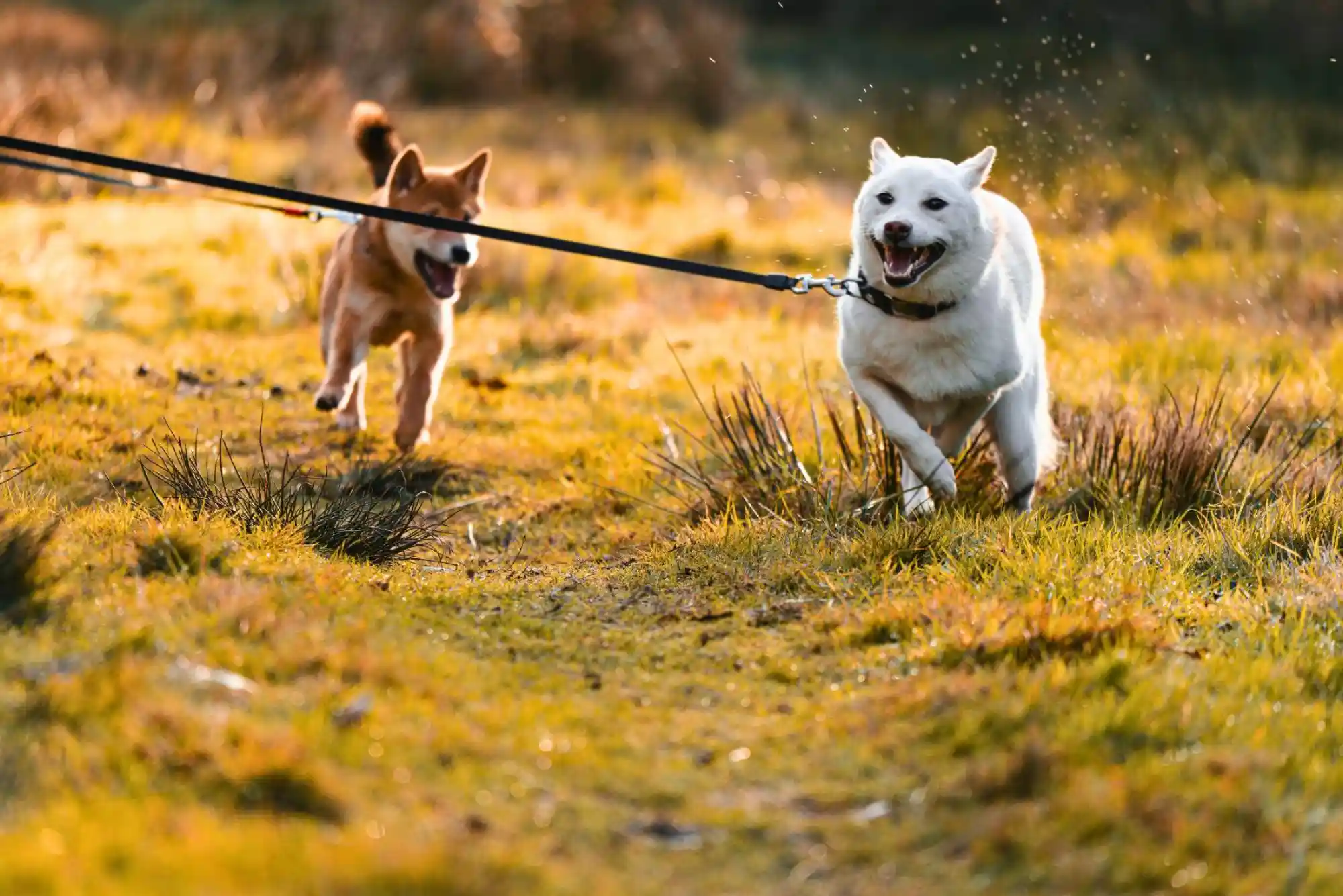
Leash tension can make difficult situations harder.
When owners see another dog approaching, they often instinctively shorten the leash and pull their dog closer. Unfortunately, this can increase physical tension and make the situation feel more restrictive.
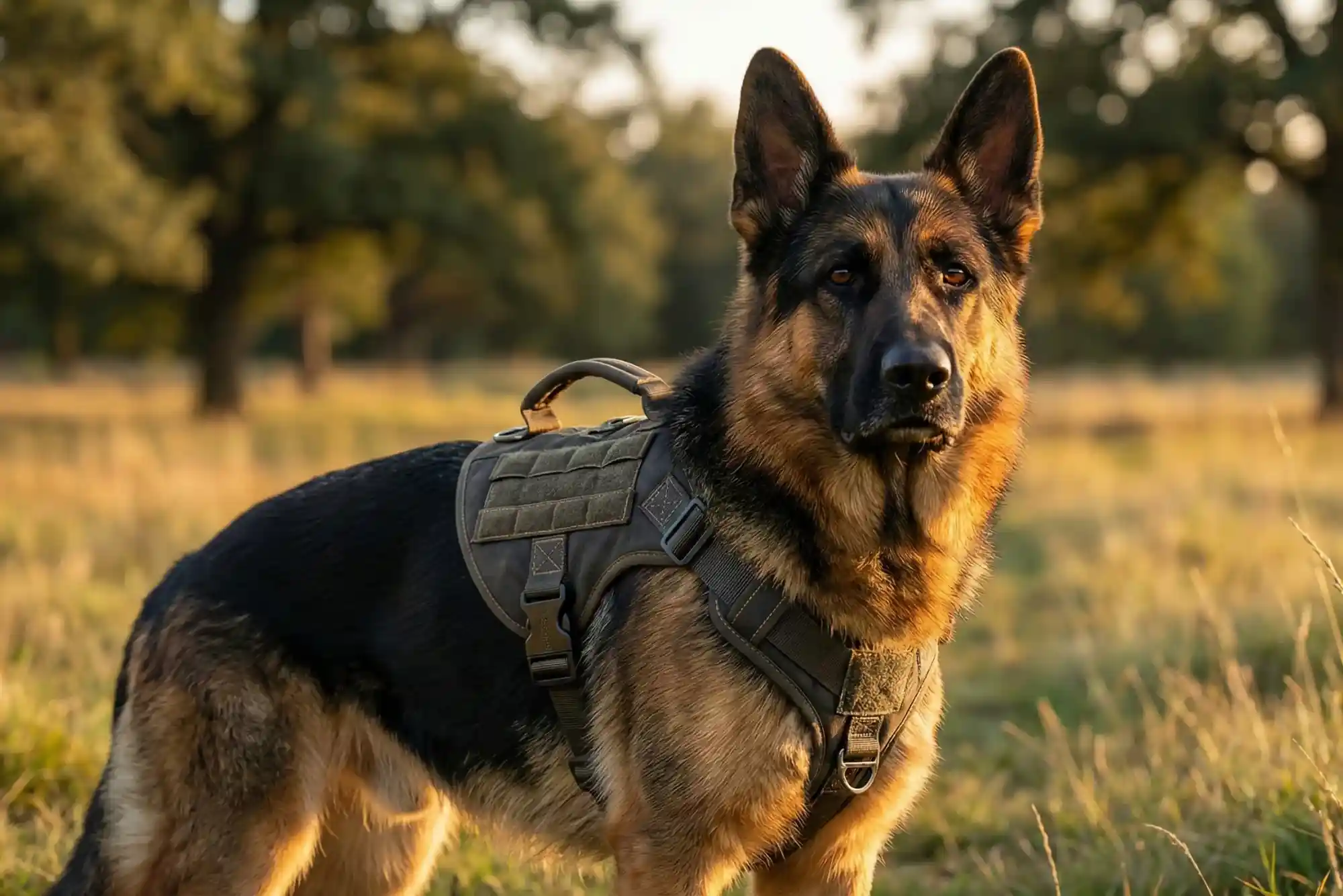
A secure, appropriately fitted harness can provide useful control while allowing you to manage movement without constantly tightening the leash.
The objective is not to let your dog drag you toward another dog. Instead, maintain enough control to create distance while avoiding unnecessary tension.
Your own body language matters too. If you suddenly become tense every time another dog appears, your dog may begin associating that leash movement with an approaching threat.
Do Not Force Close Greetings
One of the biggest mistakes in leash-reactivity training is forcing a dog to approach other dogs in the hope that it will “get used to them.”
A frightened or overwhelmed dog does not necessarily become calmer because it is repeatedly placed closer to the thing causing distress.
Instead, controlled exposure should begin at a manageable distance. The distance can gradually decrease as your dog’s responses improve.
If your dog can calmly watch another dog from 40 feet away today, that is useful progress. There is no need to rush toward 10 feet simply because another dog is nearby.
Successful training is built from repetitions that your dog can handle.
Avoid Punishing Fear-Based Reactivity
Punishment may stop a behavior temporarily, but suppressing barking does not necessarily change the emotion causing it.
For a fearful dog, harsh corrections can make the presence of other dogs even more unpleasant. The ASPCA specifically advises against punishment procedures when barking is related to fear or anxiety.
Instead of focusing exclusively on stopping the noise, focus on changing what happens immediately before the noise.
If your dog sees another dog and calmly turns toward you, reward that choice. If the dog is already lunging and barking, prioritize safety and distance rather than trying to win a training battle in that moment.
Practice in Controlled Environments
Real sidewalks can be difficult training environments because you cannot control when another dog appears.
Whenever possible, practice where you have enough space and visibility to manage the distance.
A quiet park, large open area, or wide walking route may provide more opportunities to observe another dog before it gets too close.
Short sessions are often more productive than exhausting walks filled with repeated reactions.
For example, ten minutes of carefully managed training can be more useful than an hour during which your dog repeatedly reaches its threshold.
The goal is to accumulate calm repetitions.
Know When Your Dog Is Getting Too Close to Threshold
Dogs often communicate discomfort before barking begins.
You might notice intense staring, a stiff body, closed mouth, raised posture, rapid movement, whining, lip licking, or an inability to take food normally.
These signals give you an opportunity to act before the barking begins.
If your dog suddenly stops responding to familiar cues or refuses a favorite treat, consider increasing the distance. A dog that cannot eat or respond normally may be too emotionally aroused to learn effectively.
Recognizing these early signs is one of the most important skills for anyone working on leash reactivity.
Progress Gradually
Do not measure progress only by how close your dog can get to another dog.
A better measure is the quality of your dog’s response.
Perhaps your dog previously barked when another dog was 50 feet away. After several weeks, it may calmly watch from 40 feet away. Later, it may look at the other dog and immediately check in with you.
Those small changes matter.
Progress can also fluctuate. Your dog may have a great training session one day and struggle the next. Weather, fatigue, unfamiliar surroundings, previous stressful experiences, and the number of triggers encountered that day can all influence behavior.
If your dog suddenly struggles, increase distance and return to an easier level rather than assuming the training has failed.
Create a Consistent Walking Routine
Consistency makes the process easier for both you and your dog.
Use the same marker word, reward system, emergency-turn cue, and general strategy during training walks.
Before leaving home, make sure you have rewards that your dog genuinely values. Scan the environment rather than waiting until another dog is already beside you.
When you spot a dog early, decide whether you have enough space to train. If not, move away before the reaction begins.
Management and training work together. Every successful walk gives your dog another opportunity to practice the behavior you actually want.
When Professional Help Is Needed
Some dogs have reactions that are too intense for owners to safely manage alone.
If your dog repeatedly lunges, redirects aggression toward the handler, cannot take food around dogs, has bitten another animal, or becomes impossible to control, professional assistance is appropriate.
A veterinarian can also help rule out medical factors that may contribute to behavior changes. For serious or persistent behavior problems, qualified veterinary behavior professionals or appropriately credentialed positive-reinforcement trainers can provide individualized guidance.
Professional help is especially valuable when safety is becoming a concern.
How Long Does Leash Reactivity Training Take?
There is no universal timeline.
Some dogs show noticeable changes after a few consistent weeks, while others need several months of structured work. The starting point matters, as does the dog’s history, environment, emotional response, and how often it encounters triggers.
Avoid trainers or programs that promise a guaranteed cure within a specific number of days.
Instead, look for measurable improvements such as shorter recovery time, greater distance tolerance, easier disengagement, and fewer intense reactions.
The ultimate goal is not perfection on every walk. It is giving your dog better emotional control and giving you practical ways to handle difficult situations.
Building Calm Walks Takes Practice
Learning how to stop a dog from barking at other dogs on leash is not about finding a magic command. It is about understanding why your dog reacts and systematically teaching a better response.
Start with distance. Watch your dog’s body language. Reward calm observation. Practice disengagement and emergency turns. Avoid forcing close encounters, and do not punish fear-based reactions.
Most importantly, focus on progress rather than perfection. Every calm glance, successful turn, and relaxed pass is another repetition of the behavior you want.
FAQs
How do I stop my dog from barking at other dogs while walking?
Start by creating enough distance for your dog to notice another dog without reacting. Immediately reward calm observation and any decision to look back toward you. Gradually decrease the distance only when your dog can remain relaxed.
Why does my dog bark and lunge at other dogs on leash but behave normally off leash?
Leash restraint can create frustration because the dog cannot freely approach or move away. Some dogs may also feel more vulnerable when their movement is restricted. This pattern is commonly associated with barrier or leash frustration.
Should I use a “quiet” command when my dog barks at another dog?
A quiet cue can be useful in some barking situations, but it should not replace behavior modification for leash reactivity. If the underlying issue is fear or frustration, changing the dog’s emotional response to the trigger is more important than simply suppressing the sound.
Can leash reactivity be cured?
Many dogs can make substantial improvements with consistent training and management. However, the outcome and timeline vary between individual dogs. Some dogs may continue to need distance management in particularly challenging situations.
Should I let my reactive dog meet other dogs?
Do not force greetings simply to test whether your dog has improved. Controlled interactions should only occur when the dogs are comfortable and the situation can be managed safely. For some reactive dogs, calmly passing another dog is a more appropriate training goal than greeting.
What should I do if another dog suddenly approaches my reactive dog?
Create distance as quickly and calmly as possible. Use your practiced U-turn, cross the street, move behind a barrier, or otherwise increase space. Avoid tightening the leash and engaging in a confrontation with the approaching dog or owner.
What is the best training method for leash reactivity?
A structured combination of management, desensitization, counter-conditioning, and reinforcement of alternative behaviors is commonly used. The dog should work at a level where it can still respond and learn rather than repeatedly rehearsing intense reactions.