Introduction
Bringing an older rescue dog home can be incredibly rewarding, but it can also come with challenges that are not immediately obvious. A dog may seem quiet and settled during the first few days, only to become distressed when you leave, close a door, introduce a crate, or expose them to unfamiliar sounds. For dogs with a difficult history, even ordinary household routines can trigger fear.
Learning how to crate train an older rescue dog with separation fears and phobias requires a different mindset from training a confident puppy. The goal is not to make the dog tolerate confinement as quickly as possible. The goal is to teach the dog that the crate is a predictable, comfortable place where nothing frightening happens.
Older dogs can learn new skills, and crate training can be useful for travel, veterinary care, emergencies, recovery, and providing a quiet resting area. However, a crate is not automatically appropriate for every anxious dog. The Humane Society recommends introducing the crate through pleasant associations and small steps rather than rushing the process.
When separation anxiety or phobias are involved, patience becomes even more important. A dog that is already frightened can become more distressed if confinement is introduced too aggressively.
Understanding Why Older Rescue Dogs May Fear the Crate
Before beginning crate training, try to understand what your dog is communicating. Rescue dogs can arrive with unknown histories. Some have never experienced a crate, while others may associate confinement with punishment, isolation, transportation, shelters, or frightening experiences.
An older dog may also have physical or age-related problems that make confinement uncomfortable. Changes in hearing, vision, mobility, memory, or sleep patterns can contribute to anxiety. According to the ASPCA, behavioral changes in older dogs can sometimes be associated with medical conditions, pain, sensory decline, or cognitive dysfunction.

That is why how to crate train an older rescue dog should begin with observation rather than immediately closing the door.
Watch what happens when your dog approaches the crate. Does the dog willingly investigate it? Does the dog take treats near it? Does the dog retreat when the door moves? These details tell you where training should begin.
Rule Out Medical Problems First
A sudden increase in anxiety should never automatically be treated as a training problem.
Older dogs can develop medical conditions that affect their behavior. Pain, urinary problems, neurological issues, sensory decline, and cognitive changes may cause restlessness, house soiling, confusion, clinginess, or increased anxiety.
If your rescue dog suddenly becomes distressed when alone or begins having accidents despite previously reliable house training, schedule a veterinary examination. The ASPCA specifically recommends ruling out medical causes before treating separation-related behavior.
This step is particularly important with senior rescue dogs because a behavior that looks like separation anxiety may actually have another underlying cause.
Decide Whether a Crate Is Appropriate
One of the biggest mistakes owners make is assuming that every anxious dog should be crated when left alone.
That is not always safe.
A crate can become a comfortable retreat for a dog that already feels secure inside it. However, a dog experiencing severe separation anxiety may panic when confined. The ASPCA notes that signs such as heavy panting, excessive salivation, frantic escape attempts, persistent barking or howling can indicate that crate confinement is increasing distress rather than reducing it.
If your dog becomes frantic whenever the crate door closes, stop and reassess.
A dog-proofed room, gated area, or exercise pen may be a better temporary solution. The objective is emotional safety, not simply preventing the dog from moving around the house.
Create a Safe and Comfortable Crate Environment
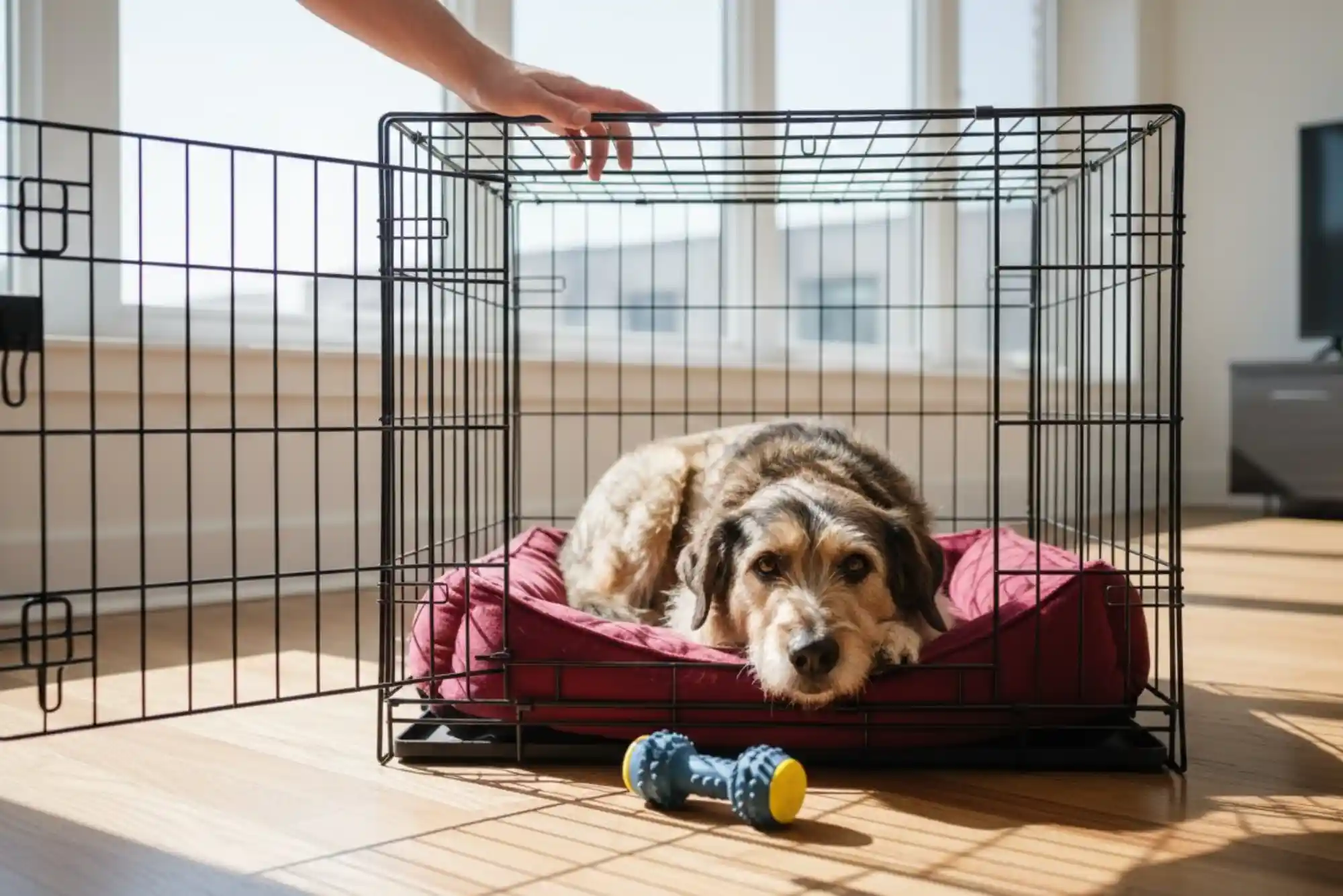
If your dog appears comfortable enough to begin training, choose a crate that allows the dog to stand, turn around, lie down, and change position comfortably.
Place it somewhere your dog already considers safe. A busy family room can work well because the dog can be near people without being forced to interact.
Avoid immediately putting the crate in an isolated room.
Make the environment comfortable, but avoid filling the crate with anything your dog could destroy or swallow. Some dogs appreciate bedding, while others prefer a bare crate or simple washable mat.
The most important feature is not the bedding. It is the emotional association.
Your dog should gradually learn:
Crate = calm, food, rest, safety, and choice.
The Humane Society recommends allowing dogs to explore the crate voluntarily and building positive associations with treats, meals, and short periods of calm confinement.
Start With the Door Completely Open
When learning how to crate train an older rescue dog, resist the temptation to close the door immediately.
Leave the crate open and allow your dog to investigate it freely.
You can place a few treats near the entrance. Once your dog comfortably approaches, place treats slightly farther inside. Eventually, the dog may choose to walk all the way inside.
Do not push the dog through the doorway.
Do not grab the collar and pull the dog inside.
Do not close the door the first time the dog enters.
For a fearful rescue dog, voluntary behavior is valuable. Every time the dog chooses to enter the crate without experiencing something frightening, you are building trust.
If your dog takes a treat and immediately backs away, that is useful information. The exercise may simply be moving too quickly.
Make Meals Part of the Training
Food can help transform the meaning of the crate.
Begin by feeding meals near the crate. If your dog is comfortable, gradually move the food bowl closer to the entrance and eventually inside.
The process should remain easy enough that your dog continues eating normally.
Once your dog happily eats inside the crate, you can begin experimenting with brief door movements. At first, the door might move only an inch before opening again.
The dog should not feel trapped.
If the dog stops eating, freezes, backs away, pants heavily, or becomes restless, return to the previous stage.
Training should create confidence rather than test how much anxiety your dog can endure.
Build Crate Duration Very Slowly
Once your dog willingly enters and relaxes inside, begin increasing the amount of time spent there.
Close the door for only a few seconds while you remain nearby. Open it before your dog becomes distressed.
Repeat this process until the closed door becomes unremarkable.
Then gradually increase the duration.
For example, you might practice several seconds, then slightly longer periods, rather than immediately expecting your dog to remain confined for half an hour.
The exact timeline varies enormously. Some dogs progress within days, while fearful rescue dogs may need weeks or longer. The Humane Society emphasizes that crate training should happen through small steps and that rushing can undermine progress.
Separate Crate Training From Alone-Time Training
This distinction is especially important when learning how to crate train an older rescue dog with separation fears.
Your dog has two separate skills to learn:
Feeling comfortable in the crate.
Feeling comfortable when you are away.
Trying to teach both at exactly the same time can overwhelm a fearful dog.
First, teach your dog that the crate is safe while you are still in the room. Sit nearby and read, work, watch television, or simply relax.
Once your dog can remain calm with you nearby, briefly move out of sight and return.
Do not immediately walk out of the house.
The ASPCA recommends very gradual absences for dogs with separation anxiety, sometimes beginning with departures lasting only a few seconds and increasing the duration according to the dog’s individual tolerance.
Practice Departure Cues Without Leaving
Many dogs become anxious before their owner actually leaves.
Keys, shoes, coats, bags, opening the front door, or turning off lights can become signals that predict separation.
You can change these associations through harmless practice.
Pick up your keys and sit down.
Put on your shoes and make yourself a cup of tea.
Open the front door and close it without leaving.
Over time, these actions become less meaningful because they no longer consistently predict a long absence.
This type of gradual desensitization is commonly used in separation-anxiety treatment.
Use Positive Reinforcement Instead of Force
Fear-based training can be particularly damaging with rescue dogs.
Never use the crate as punishment for barking, destroying something, having an accident, or refusing a command.
If the crate becomes associated with punishment, your dog may begin avoiding it altogether.
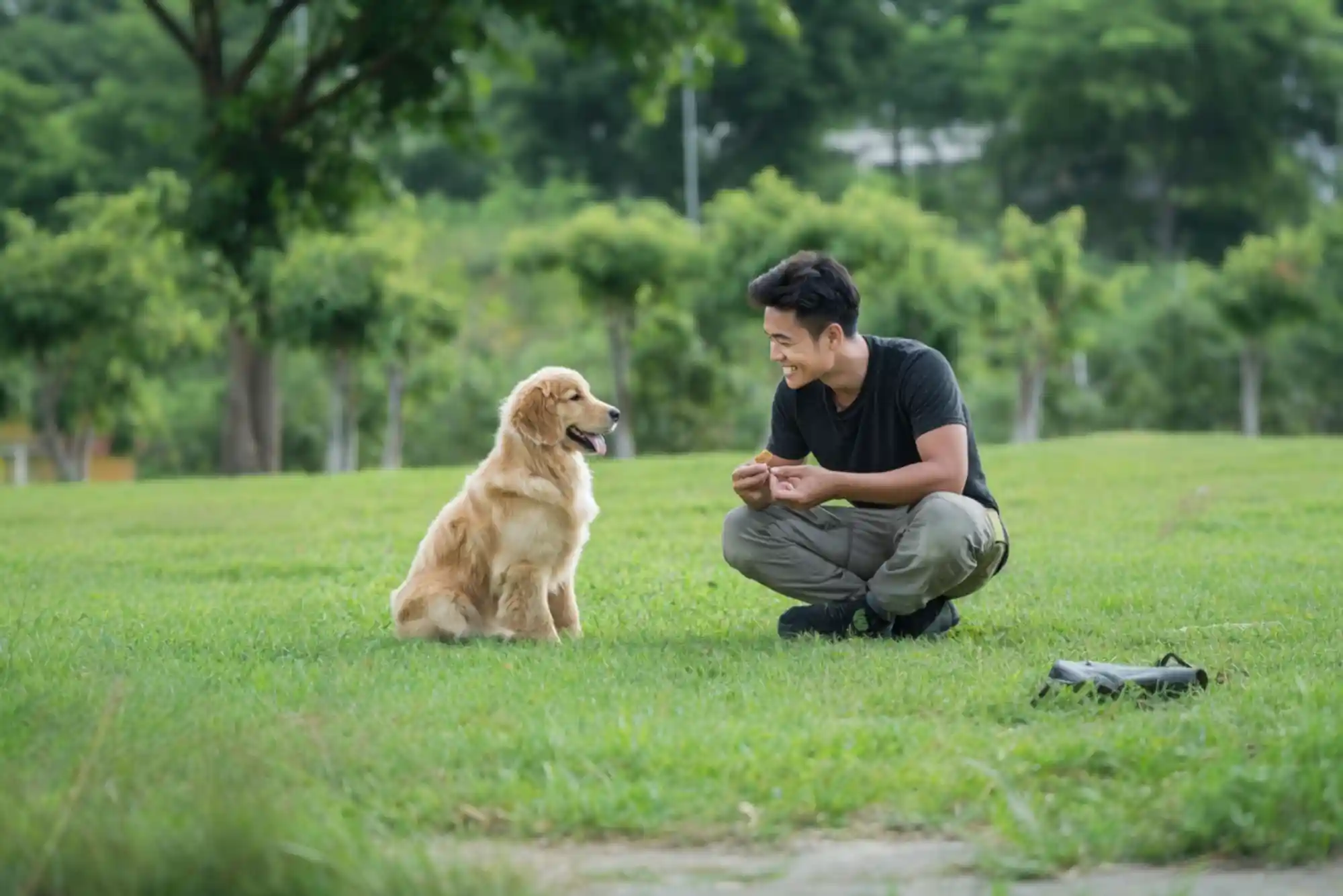
Reward-based training gives the dog a reason to participate. Treats, praise, food toys, and calm interaction can all reinforce relaxed behavior.
The ASPCA supports humane training methods that rely primarily on rewards and aim to achieve training goals with the least amount of stress.
Learn the Difference Between Mild Protest and Panic
Not every sound means the same thing.
A dog may briefly whine because the door has closed. That is different from a dog who is panting heavily, drooling, trembling, biting the crate, throwing their body against the door, or desperately trying to escape.
Panic is a warning that the training level is too difficult.
Severe separation anxiety can include destructive behavior, vocalization, house soiling, escape attempts, and extreme distress shortly after the guardian leaves.
If your dog is attempting to break out of the crate, do not simply wait for them to “get used to it.” Escape attempts can result in serious injuries.
Address Your Dog’s Specific Phobias
Separation fear may not be your rescue dog’s only concern.
Some older dogs are frightened by thunderstorms, fireworks, traffic, vacuum cleaners, unfamiliar people, slippery floors, or particular sounds.
These fears should be handled separately.
If your dog is already anxious about thunder, for example, do not introduce a difficult crate exercise during a storm. The goal is to keep the overall level of stress manageable.
The ASPCA explains that older dogs may develop or experience increased fears and phobias due to sensory decline, cognitive changes, or anxiety. Behavioral modification should be gradual, and professional guidance can be valuable for serious cases.
Use a Camera to Understand What Happens When You Leave
A camera can reveal behavior you cannot see personally.
Some dogs appear calm when you leave but begin pacing several minutes later. Others immediately bark, scratch doors, circle the room, or attempt to escape.
Recording your dog’s behavior can help you determine whether the crate itself is causing distress or whether the primary problem is being alone.
If your dog remains relaxed in the crate while you are present but panics immediately after you leave, the separation component needs particular attention.
Keep Departures and Returns Calm
Dramatic goodbyes can unintentionally make departures more significant.
Instead, keep your routine predictable.
Leave calmly and return calmly. Once home, give your dog a little time to settle rather than turning your arrival into a huge emotional event.
The purpose is to make leaving and returning ordinary parts of daily life.
A predictable routine can be especially helpful for rescue dogs who have already experienced major changes.
Avoid Long Crate Sessions
A crate should never become a substitute for exercise, companionship, training, or enrichment.
Older dogs still need appropriate physical activity, mental stimulation, social interaction, bathroom breaks, and opportunities to move freely.
The Humane Society emphasizes that dogs should not spend most of their lives in a crate.
For a rescue dog with anxiety, excessive confinement can also create frustration and make the emotional problem harder to resolve.
Think of the crate as one tool within a larger routine, not the entire solution.
When Professional Help Is Necessary
Some dogs need more than home training.
Seek professional assistance if your dog regularly injures themselves attempting to escape, experiences severe panic, cannot tolerate even very short absences, refuses food when alone, or displays sudden and unexplained behavioral changes.
A veterinarian can investigate medical causes and discuss whether medication could support behavioral treatment. A qualified veterinary behaviorist or experienced behavior professional can help develop a structured desensitization and counterconditioning program.
The ASPCA notes that medication can be useful in some serious cases of separation anxiety and that veterinary behavior professionals can help coordinate behavioral and medical treatment.
Professional support is not a sign that you have failed. For a severely anxious rescue dog, it can be one of the most compassionate decisions you make.
Common Mistakes to Avoid
One of the most common mistakes is moving too quickly. An owner may see the dog enter the crate once and assume the dog is ready to stay there for an hour. That leap can undo several days of progress.
Another mistake is using the crate only when the owner leaves. If the crate always predicts separation, the dog may begin avoiding it.
Punishment is another serious problem. A frightened dog does not need to be corrected for feeling afraid.
Finally, do not assume that a quiet dog is necessarily relaxed. Some dogs freeze or shut down rather than visibly struggle. Look for loose body language, normal breathing, willingness to eat, voluntary movement, and the ability to settle.
How Long Does Crate Training an Older Rescue Dog Take?
There is no universal timetable.
A confident older dog with no negative history may learn to enjoy a crate relatively quickly. A rescue dog with fear, phobias, or previous confinement trauma may require weeks or months of careful work.
Progress should be measured by behavior, not by the calendar.
If your dog can calmly enter the crate today, that is progress. If tomorrow the dog can relax with the door closed for a few seconds, that is progress too.
Small successes eventually create the larger skill.
Give Your Rescue Dog Time to Feel Safe
Learning how to crate train an older rescue dog with separation fears and phobias is less about teaching obedience and more about building trust.
Your dog needs to discover that the crate does not mean punishment, abandonment, or danger. Through gradual exposure, positive reinforcement, predictable routines, and careful observation, many older dogs can learn to view a crate as a comfortable place to rest.
But remember that the crate is not a treatment for severe separation anxiety. If confinement increases your dog’s panic, use a safer alternative while addressing the underlying anxiety. When fear is severe, involve your veterinarian or a qualified behavior professional rather than trying to push through the problem alone.
FAQs
Can you crate train an older rescue dog?
Yes. Older dogs can learn to feel comfortable in a crate, although rescue dogs with fear or negative past experiences may require considerably more time and patience. The process should rely on gradual exposure and positive associations rather than force.
Should you crate a dog with separation anxiety?
Not automatically. A crate can help a dog that already considers it a safe place, but it can worsen distress in a dog that panics when confined. Watch for heavy panting, drooling, frantic escape attempts, persistent vocalization, or self-injury.
Can a crate make separation anxiety worse?
Yes. If the dog is frightened by confinement, adding a closed crate to separation can increase anxiety. In such cases, a dog-proofed room or gated area may be a safer option while the underlying separation problem is addressed.
How do you crate train a dog with separation anxiety?
First build a positive relationship with the crate while you are home. Then gradually introduce short periods behind the closed door. Only after the dog can remain relaxed should you begin carefully practicing very short absences. Separation-anxiety treatment generally relies on gradual desensitization and counterconditioning.
How long does it take to crate train an older dog?
The timeframe varies according to the dog’s temperament, history, age, previous experiences, and anxiety level. Some dogs progress quickly, while fearful rescue dogs may need weeks or longer. The Humane Society recommends progressing through small steps rather than following a rigid timetable.
What should I do if my rescue dog cries in the crate?
First determine whether the dog is mildly protesting or experiencing genuine distress. If the crying escalates into heavy panting, frantic scratching, drooling, trembling, or escape attempts, stop increasing the difficulty and reassess the training plan. Severe distress warrants professional guidance.
Is it ever too late to crate train an older dog?
No. Age alone does not prevent a dog from learning new associations. However, an older dog’s physical comfort, medical condition, previous experiences, and emotional state should influence how training is approached.
What is the best way to calm a rescue dog with separation anxiety?
Start by reducing situations that trigger panic and establish a predictable routine. Gradual separation exercises, positive reinforcement, enrichment, and professional behavioral support can help. If anxiety is severe or newly developed, consult a veterinarian to rule out medical causes and discuss treatment options.